DATE
16/05/2026
Seven uncomfortable truths about why brands fail in the world's most unusual market
Regional Marketing
Copy
Dubai is one of the most studied, most discussed, and most misunderstood marketing environments on the planet.
Every global agency has a thesis on it. Every regional consultancy claims to have cracked it. And yet the failure rate of brand-building efforts here - campaigns that spend freely, launch loudly, and disappear without a trace - remains stubbornly, expensively high.
The reason is not creativity. It is not budget. It is not the talent in the room.
It is that most marketers are applying frameworks built for entirely different cities, to a place that operates on fundamentally different rules.
This article is an attempt to name those rules. Seven of them, specifically. Each one draws on structural market data, cultural psychology, and hard-won pattern recognition from working inside this market. None of them are comfortable. All of them are actionable.
The brands that will define Dubai's next decade are not the ones spending the
most. They are the ones thinking most clearly about where they actually are.
01 - DEMOGRAPHICS
The Expat Horizon Problem
Why loyalty programs are architecturally broken in Dubai
The entire Western model of brand loyalty assumes one thing above all else: that consumers stay.
Dubai's population doesn't.
As of 2025, the expatriate population of Dubai stands at 92% - 3.53 million people - making it one of the most demographically unusual cities in human history.¹ Nearly the entire city is comprised of people who were born somewhere else, hold citizenship somewhere else, and for most of modern history, expected to return somewhere else.
Brand loyalty as a discipline was constructed in post-WWII America - a market defined by suburban permanence, multigenerational household formation, and consumers who stayed in the same city and passed brand preferences to their children like heirlooms. Kotler's frameworks assumed it. Ogilvy's long-copy ads were written for it. Loyalty programs are architecturally dependent on it.
For most of Dubai's modern commercial history, the average resident had a 4.4-year horizon in the UAE - above the global average of 3.2 years, but still a population thinking in the medium term.² That is not enough runway to build the depth of loyalty that most marketing strategies require.
But here is where it gets strategically interesting: something is changing.
According to betterhomes' Future Living Report 2025, the average length of residency in Dubai has jumped to 10.5 years, up from 7.5 years in 2024. Nearly 60% of residents now plan to stay for more than a decade.³ Dubai's General Directorate of Residency and Foreigners Affairs issued 158,000 Golden Visas in 2023 alone - nearly doubling the prior year.⁴
The population is not just staying longer. The depth of commitment is changing. And almost no brand in this city has updated its brief to reflect it.
The brands winning the next decade in Dubai are not building loyalty. They are building gravity - the kind that makes leaving feel like a loss.
Gravity and loyalty are not the same thing. Loyalty is behavioral - a positive habit that can be disrupted by a better price. Gravity is psychological - when a brand is woven into a consumer's sense of identity, community, and place. It cannot be disrupted by a competitor's promotion.
The consumer you are marketing to in 2025 has a 10-year horizon, a Golden Visa, children in a Dubai school, and an apartment they are renovating - not vacating. They are not the same psychological creature your strategy was written for.
02 - CULTURE
The Trust Architecture of the Gulf
Why Western trust mechanics fail here - and what replaces them
In Germany, trust is built through reliability. Deliver what you promise, on time, to specification, repeatedly. Trust compounds through demonstrated competence over time.
In the United States, trust is built through transparency. Be open about your process, your pricing, your values. Remove information asymmetry and consumers extend trust in return.
In the Gulf, the cultural code for trust is something entirely different: protection.
Who shields you. Who vouches for you. Who brings you inside the circle.
The anthropologist Clotaire Rapaille spent decades decoding the unconscious cultural imprints that drive consumer behavior across societies. His central insight - that every culture has a distinct reptilian code governing decisions in any given category - is nowhere more visible than in how trust operates in GCC markets.
Wasta is the most visible expression of this code. In Western business culture, it is often misread as corruption - an unfair circumventing of meritocratic process. That reading misses the point entirely. Wasta is not corruption. It is the market's native trust infrastructure. It is the mechanism by which protection is extended, vouched for, and circulated through networks of mutual obligation.
Brands that try to earn trust through Western mechanics - transparent pricing, customer reviews, satisfaction guarantees, verified case studies - often find themselves doing everything right and still losing deals to a competitor with half the capability but the right personal connections.
The reason is not that Dubai buyers are irrational. It is that they are applying a completely different trust algorithm.
You are not competing on quality. You are competing on belonging. And belonging, in this market, is conferred by association - not earned through features.
What this means practically: the fastest path to trust in a GCC B2B context is not a better pitch deck. It is the right introduction. The right event appearance. The right endorsement from someone already inside the circle.
Marketing that ignores this spends heavily on the mechanics of persuasion - and wonders why the closed deals keep coming through relationships that exist entirely outside the funnel.
03 - POSITIONING
Dubai Doesn't Have a Marketing Problem
It has a meaning problem - and specificity is the cure
Walk through the brand portfolios of fifty Dubai businesses in any sector - real estate, hospitality, financial services, retail - and you will notice something striking.
They all say approximately the same thing.
World-class. Premium. For everyone. Trusted by thousands. Excellence without compromise.
The copy is interchangeable. The visual language is interchangeable. The value propositions are interchangeable. In a city of 200 nationalities and arguably the highest concentration of marketing spend per capita in the Arab world, the dominant output is a vast sea of sameness.
The reason is not laziness. It is fear.
Dubai brands are terrified of specificity. The logic is understandable: if your potential market is 200 nationalities with vastly different cultural backgrounds, income levels, and consumer preferences, then the safest play is to say nothing that would exclude any of them.
The result is that they say nothing that would connect with any of them either.
David Ogilvy's most radical insight - one that still cuts against the instincts of most marketing committees - was that the moment you try to speak to everyone, you speak to no one. Every brand that has ever achieved genuine dominance, in any market, made a violent decision about who it was not for.
Apple does not want every computer buyer. Hermès does not want every luxury consumer. Nike does not want every athlete. Specificity in Dubai feels like risk. It is actually the only path to dominance.
The global brands dominating Dubai's premium market - from fashion to hospitality to automotive - all made this decision. They planted a flag. They accepted that planting a flag means some people will walk past it. And they built everything from that specific, uncompromising point of view.
The Dubai brands trying to capture everyone are, without exception, capturing no one in particular. They are present in the market. They are not owned in the mind.
There is an immense and almost entirely uncaptured opportunity in this city for any brand willing to be specific. Not niche. Specific. There is a difference. Niche is small. Specific is clear. Clarity, in a market defined by noise, is the rarest commodity of all.
04 - STRATEGY
The Ramadan Trap
Why the most celebrated campaign window produces the worst brand recall
Every brand activates in Ramadan.
This is stated as if it is obvious. As if there could be no other approach. Ramadan is the most important cultural moment in the calendar. Of course every brand activates.
And that is precisely why Ramadan is, paradoxically, the worst window in the year to build brand differentiation.
When every brand in every category whispers in the same emotional register - generosity, warmth, family, giving, community - simultaneously, the result is not a chorus. It is noise. The signals cancel each other out. The consumer, bombarded by functionally identical emotional cues from every direction, does not build stronger associations with any individual brand. They build stronger associations with the season itself.
Ramadan advertising in Dubai produces enormous reach numbers. It produces consistently low brand-specific recall - because the emotional territory is so uniformly occupied that individual brands become indistinguishable from the ambient feeling of the month.
This is not a creative problem. The individual campaigns are often beautiful. It is a strategic problem. Beauty inside an undifferentiated category does not create memory structure. It creates atmosphere.
The brands that own Ramadan are not the ones who activated hardest during it. They are the ones who built strong enough brand equity in the quiet months that consumers already associated them with its values before the month began.
The counterintuitive strategic implication: Ramadan is the right window for retention and depth of relationship with existing customers. It is a poor window for acquisition and differentiation.
The acquisition window - when competitors go dark, media costs drop, and consumers have mental space to encode new brand information - is the months that surround it. Brands that invest seriously in the shoulder seasons, when the market is quiet, consistently outperform brands that concentrate everything in Ramadan.
This is not to say Ramadan activations have no value. They have enormous value - for reinforcing existing brand relationships, for community engagement, for brand citizenship. The mistake is treating Ramadan as a differentiation engine when it is structurally designed to be a leveler.
05 - PSYCHOLOGY
What Dubai Actually Buys
The reptilian code beneath every premium purchase in this city
Consumers do not buy products. They buy the feeling of who they become after owning them.
This is not a metaphor. It is the operating principle of the brain's most ancient decision-making architecture - what Rapaille called the reptilian brain - the layer of cognition that processes identity, safety, and status before the rational mind has had a chance to form an opinion.
In most markets, the reptilian code beneath premium purchases is some variation of status - the display of superiority, the signal of achievement, the communication of rank.
In Dubai, it is something more specific. It is elevation.
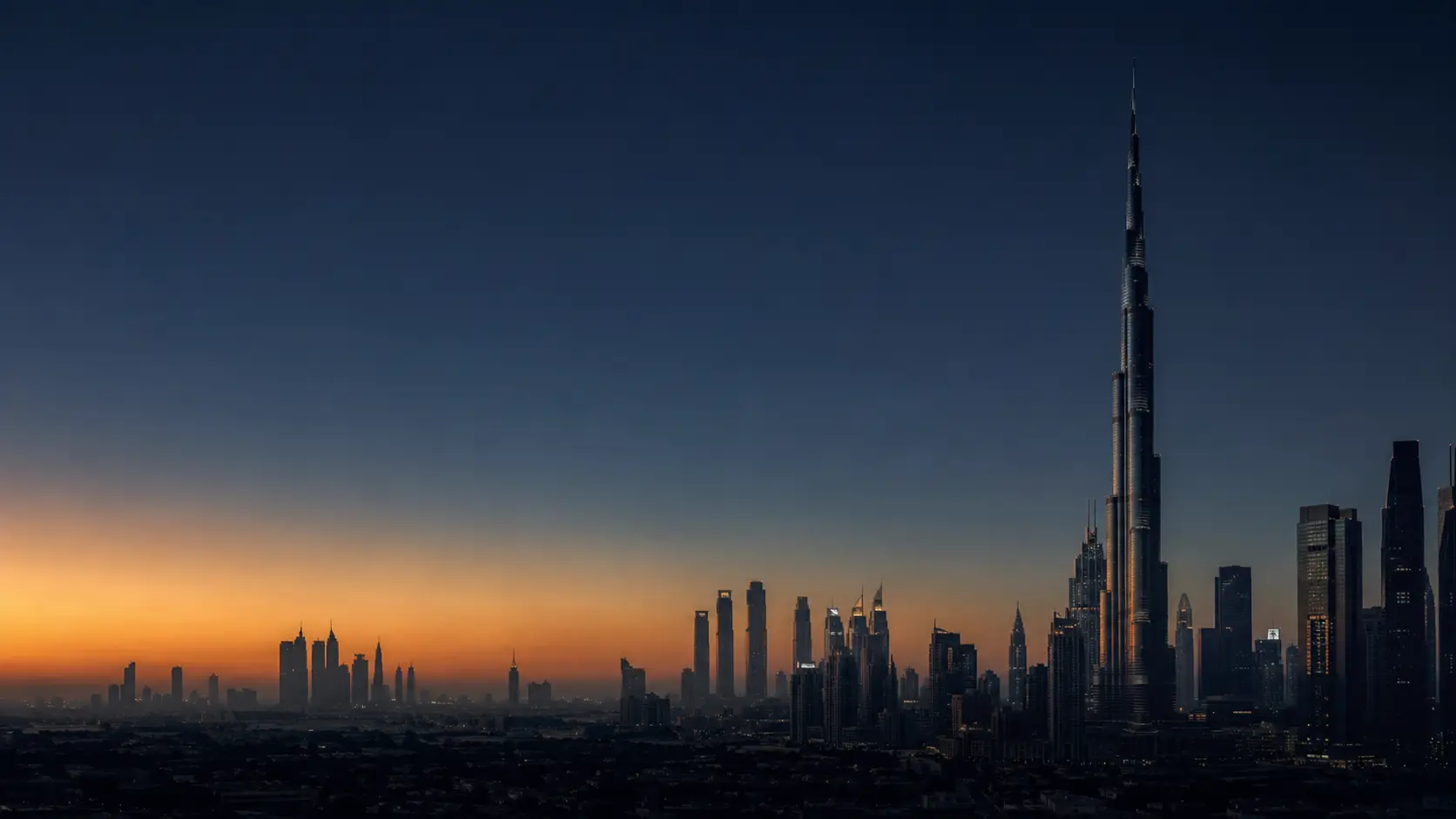
Not status exactly - status is comparative, it requires an audience. Elevation is different. It is the physical, almost somatic sensation of rising above. It is why the skyline is not merely an architectural backdrop in this city - it is the city's most powerful brand asset, and every marketer should be paying attention to what it codes in the consumer's unconscious.
The Burj Khalifa does not represent luxury. It does not represent technology. It represents the act of defying gravity - of rising, physically and metaphorically, above the constraints that exist everywhere else. That is the reptilian code of Dubai itself. And it operates beneath every premium purchase decision made in this market.
The brands winning in Dubai are not selling products. They are selling the sensation of rising. Brands that merely signal expensive get purchased once and forgotten. Brands that make people feel elevated get purchased, recommended, and defended.
There is a specific and observable difference between these two categories in Dubai's premium market. Brands that lead with exclusivity, price signals, and status markers tend to attract transactional buyers - people who want the status but have no emotional investment in the brand itself.
Brands that lead with aspiration, transformation, and the sensation of becoming something more - these brands build advocates. Their customers do not just buy. They recruit.
Most creative briefs in Dubai never name this mechanism. They brief for premium. They brief for aspirational. They do not brief for elevation - the specific, culturally embedded psychological experience that this city triggers in almost every person who chooses to be here.
Name it. Brief for it. Build it into every touchpoint. The brands that understand this code do not just sell to Dubai - they become part of what Dubai means.
06 - B2B
The Founder Asymmetry
Why the most valuable brand asset in GCC B2B is almost entirely uninvested
In GCC B2B markets, enterprise deals are won person-to-person before they are ever won company-to-company.
This is not a soft observation. It is a structural feature of how trust operates in Gulf commercial culture - the same protection-based trust architecture described earlier, applied specifically to high-value business relationships.
Before a CFO signs a large retainer, before a real estate developer commits to a brand partnership, before a fintech founder hands over a significant budget - they are not primarily evaluating the company's capabilities. They are evaluating the person behind it. Their reputation. Their network. Who vouches for them. Whether they are someone worth being associated with.
The company's portfolio, case studies, and credentials matter - but they matter as supporting evidence for a decision that was already forming around the founder's personal credibility.
The companies closing the largest deals in Dubai right now are not necessarily the most capable agencies. They are run by the most visible, most trusted individuals. The ROI on founder brand in this market is the most asymmetric and most uninvested opportunity in professional services.
And yet: most founders in Dubai allocate 0% of their marketing budget to their own credibility architecture. They build beautiful company brand decks. They invest in agency positioning. They hire content teams. And then they post on LinkedIn twice a year, attend events without a point of view, and wonder why business development feels like pushing water uphill.
The asymmetry is this: a single well-positioned article from a founder, shared authentically and with genuine insight, can open more doors than a six-month paid campaign for the company. A speaking slot at a relevant industry event, handled with genuine intellectual contribution rather than sales messaging, can create more pipeline than a year of outbound email sequences.
This is not universally true in every market. It is specifically, structurally true in the GCC - where the person is the trust signal, and the company is what you investigate after the person has already earned your confidence.
Building the founder's public credibility is not a vanity project. In this market, it is the highest-leverage business development activity available.
07 - INVESTMENT
The Performance Marketing Illusion
Why you can measure every click and still have no idea why anyone buys
Performance marketing is the most measurable thing in your budget.
It is also measuring the wrong thing.
This is the central paradox of modern marketing - and in Dubai, where the three largest categories (real estate, financial services, luxury) run almost entirely on desire, it is an especially expensive one.
Performance marketing can measure every click, every impression, every conversion. It can attribute the final step of a purchase decision with remarkable precision. What it cannot measure - and what drives the majority of every significant purchase decision - is desire. The accumulated emotional and psychological weight that builds over time, through repeated brand encounters, through cultural associations, through the stories consumers tell themselves about who they are and who they aspire to become.
You can attribute the conversion. You cannot attribute the desire.
These are not the same thing. And conflating them is the single most expensive strategic error in Dubai's marketing landscape.
Nobody buys a AED 3 million apartment because of a retargeting ad. They buy because of how owning it makes them feel - a feeling built over months or years of brand encounters, none of which appear in your ROAS dashboard.
The measurability of performance marketing creates a psychological trap for marketing decision-makers. What gets measured gets optimized. What cannot be measured gets defunded. Over time, organizations systematically shift budget toward the thing they can prove and away from the thing that is actually driving the decisions they are trying to influence.
The result - visible across Dubai's marketing landscape - is a generation of brands with highly efficient paid media operations and almost no brand equity. They can optimize a cost-per-lead to two decimal places. They disappear the moment they stop spending.
ROAS tells you what converted. It cannot tell you why someone chose you at full price instead of your competitor at half price. That gap - between the measurable and the decisive - is where brand lives.
The brands building durable market positions in Dubai are not choosing between performance and brand. They are investing in both, with a clear understanding of what each layer of the investment is doing: performance captures desire that already exists; brand creates the desire that performance will eventually capture.
Remove the brand layer and the performance layer stops working - slowly at first, then suddenly. This is not a theoretical risk. It is a pattern playing out, in slow motion, across dozens of Dubai's most heavily-advertised brands right now.
Conclusion
These seven problems share a common root.
They are all the result of applying borrowed thinking to an original situation.
Dubai is not New York. It is not London. It is not Singapore, though the comparison flatters both cities. It is a genuinely new kind of place - built at unprecedented speed, populated by unprecedented demographic diversity, governed by cultural codes that do not map neatly onto any Western marketing framework ever written.
The brands that will define this city's next chapter are not the ones with the largest budgets or the most sophisticated technology stacks. They are the ones that have done the harder work of understanding where they actually are - the psychological, cultural, and structural realities of this specific, irreducibly unusual market.
That understanding is the most durable competitive advantage available. It cannot be bought. It cannot be copied. And right now, in Dubai's marketing landscape, it is almost entirely unclaimed.
About Mad Lads
Mad Lads is a full-service brand and marketing agency based in Dubai, backed by Alwani Group. We work with founders, CMOs, and growth leaders who are serious about building brands that compound - not campaigns that evaporate.
References
1. Global Media Insight - Dubai Population Statistics 2025 (January 2025). globalmediainsight.com
2. Cigna - 360° Global Well-Being Survey 2022. cigna.com
5. Henley & Partners - Global Private Wealth Migration Report 2024. henleyglobal.com